
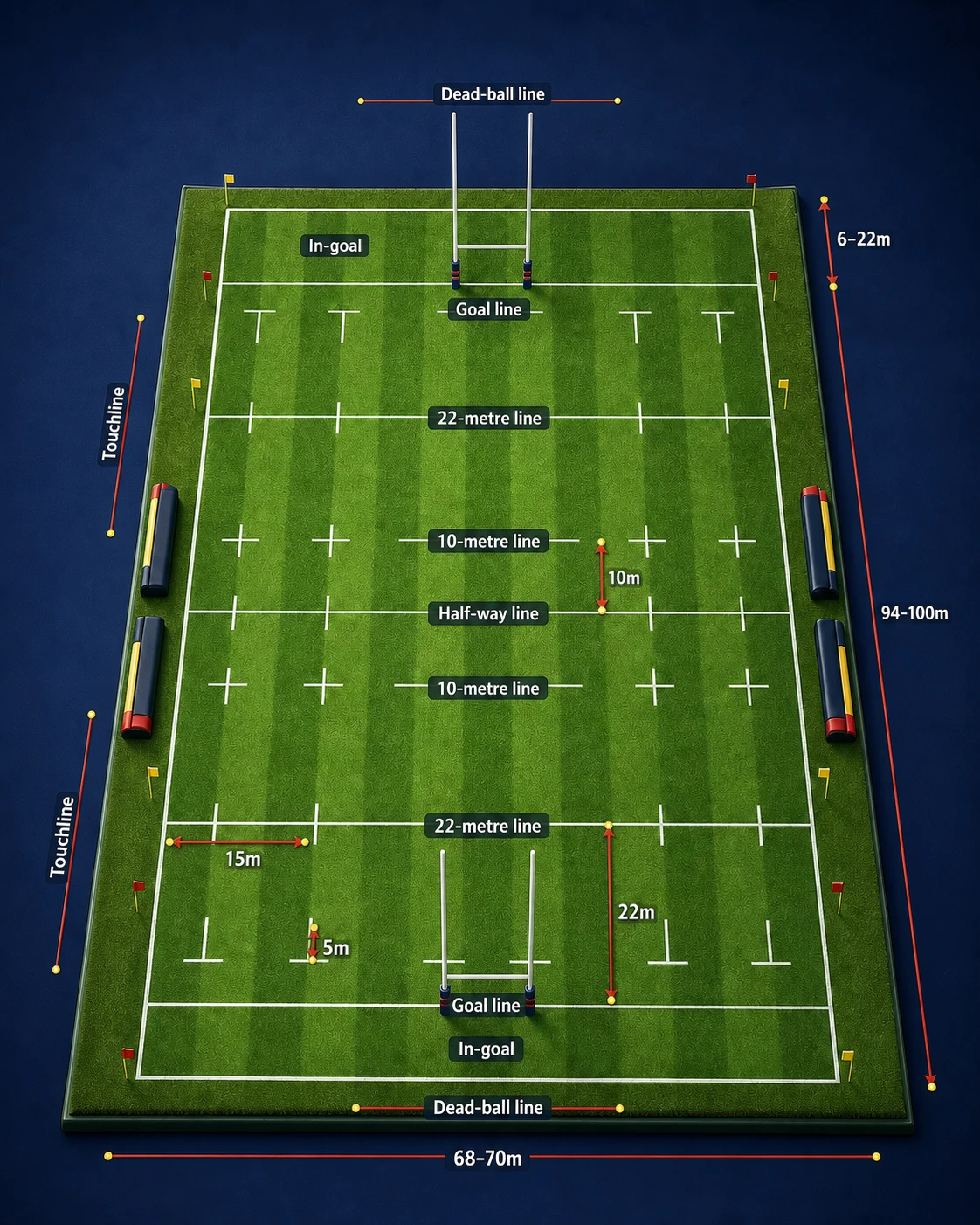
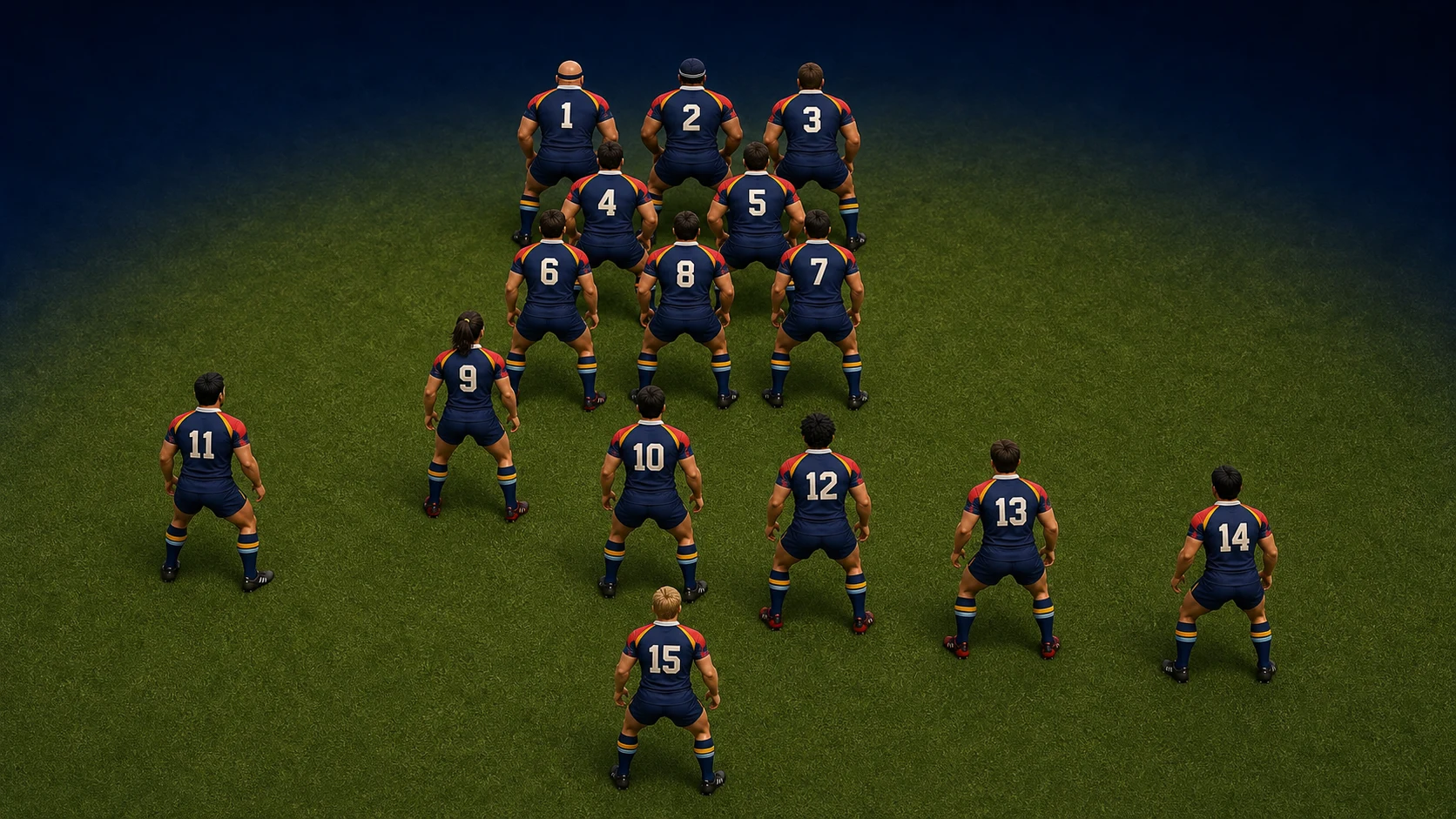
Forwards
- Props (1, 3)
- Hooker (2)
- Locks (4, 5)
- Flankers (6, 7)
- Number 8
They win possession at scrums and lineouts, protect the ball at rucks, and do most of the heavy tackling.
Beginner guide
Never watched or played before? Here’s how the game works: the objective, who plays where, how points are scored, and the ruck breakdown explained simply.

The basics
Score more points than the opposition by carrying, passing or kicking the ball down the pitch — then grounding it in their in-goal area.
You don’t need to know all of this to start. Come to training, play touch or contact at your own pace, and the rules will click into place as you go.
On the pitch
A team is 15 players split into two groups: forwards, numbered 1–8, and backs, numbered 9–15. Your shirt number tells you (roughly) what your job is.

They win possession at scrums and lineouts, protect the ball at rucks, and do most of the heavy tackling.
They use speed and space to run, pass and kick — turning possession the forwards win into points.
Want to understand every shirt number? Explore all 15 rugby positions, their responsibilities and typical skills.
Points on the board
Four ways to put points on the board, worth different amounts.
Pressing the ball firmly onto the ground in the opponent’s in-goal area.
A kick at goal taken right after a try, in line with where the ball was grounded.
A kick through the posts, awarded after a major opposition penalty.
A kick through the posts during open play — the ball must touch the ground first.
Core rules
Everything else builds on these.
The breakdown
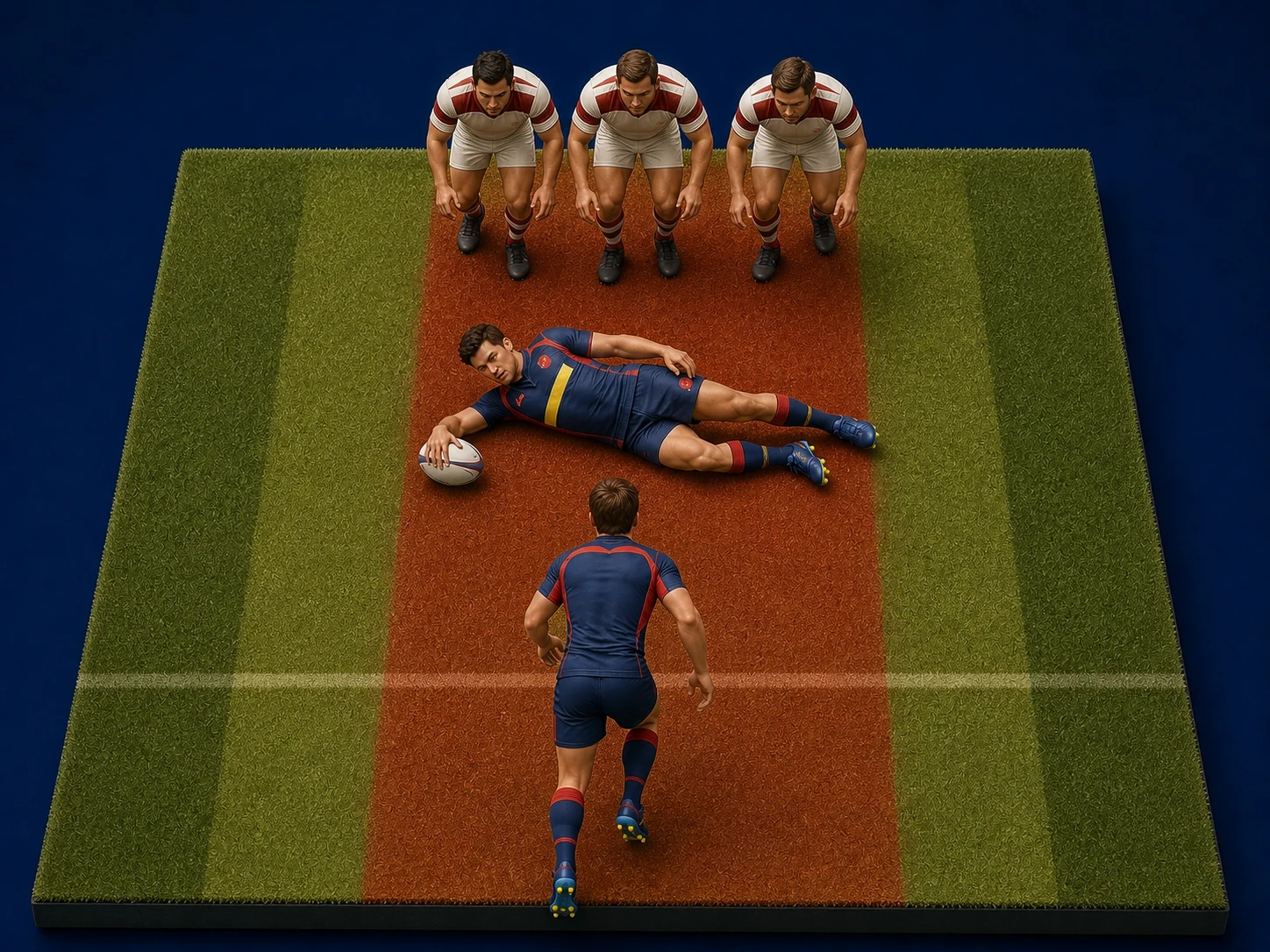
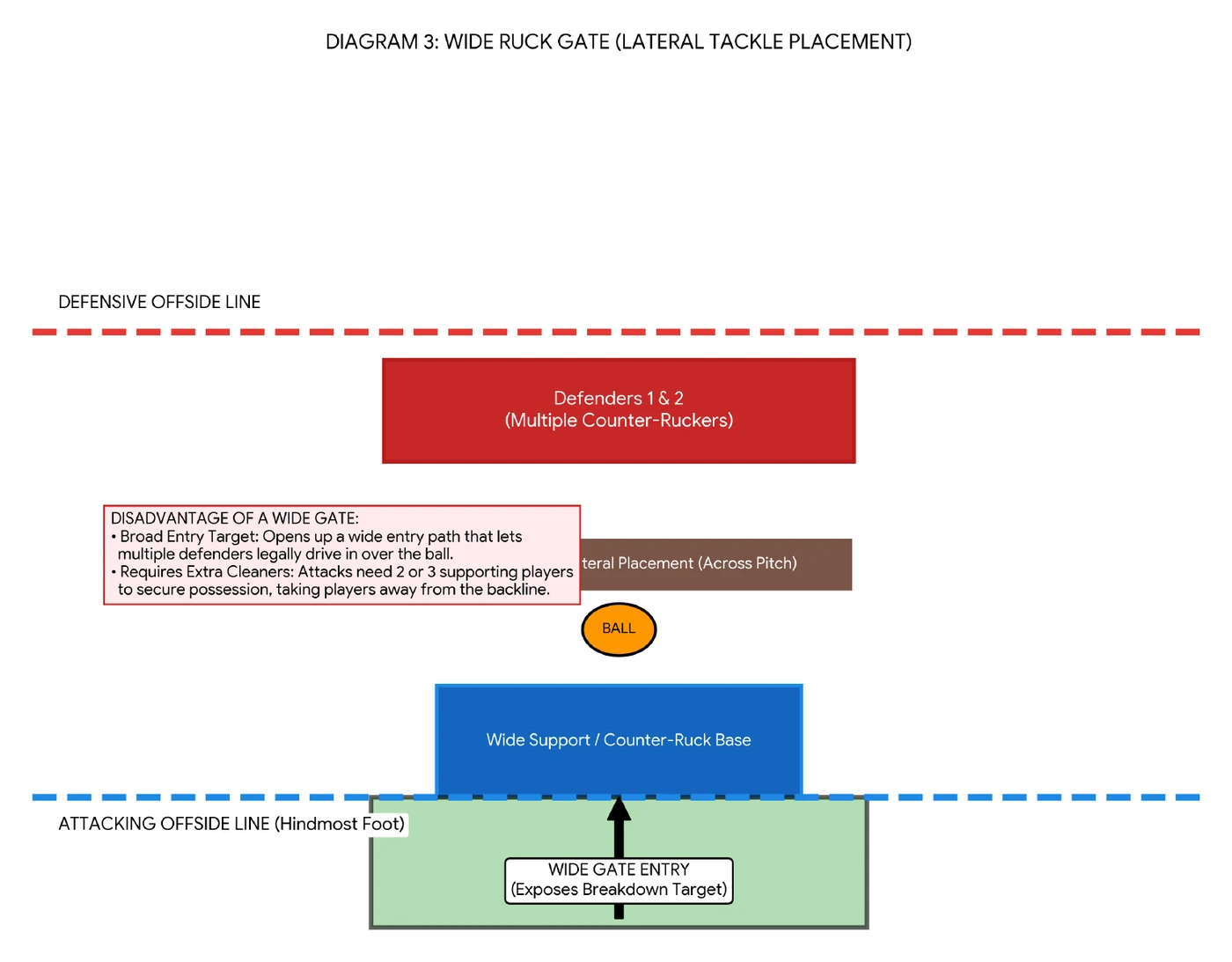
A ruck forms when the ball carrier is tackled and one or more players from each team bind over the ball on their feet to contest it. The “gate” is the entry channel directly behind your team’s hindmost foot — the only way in.
Once a ruck has formed, no one may pick up or handle the ball. Use your feet to push opponents back or hook the ball backwards.
Join a ruck only from directly behind your own team’s hindmost foot. Coming in from the side is an immediate penalty.
Support your own body weight at all times. Diving on the ball or going to ground on purpose is a penalty.
An imaginary line runs sideline to sideline through the hindmost foot of the last player in the ruck. Uninvolved players stay behind it until the ball comes out.


Why a narrow gate helps the attacking team: going to ground parallel to the sideline (rather than across it) presents a narrow target. That limits how many defenders can legally challenge for the ball and lets a single supporting player protect it — freeing up the rest of the team for the next phase.
Watch & learn
Reading about rugby only gets you so far — these are good starting points, and any coach at training is happy to answer questions.
Official reference and video starting points: